
Master of Optometry
Course Description
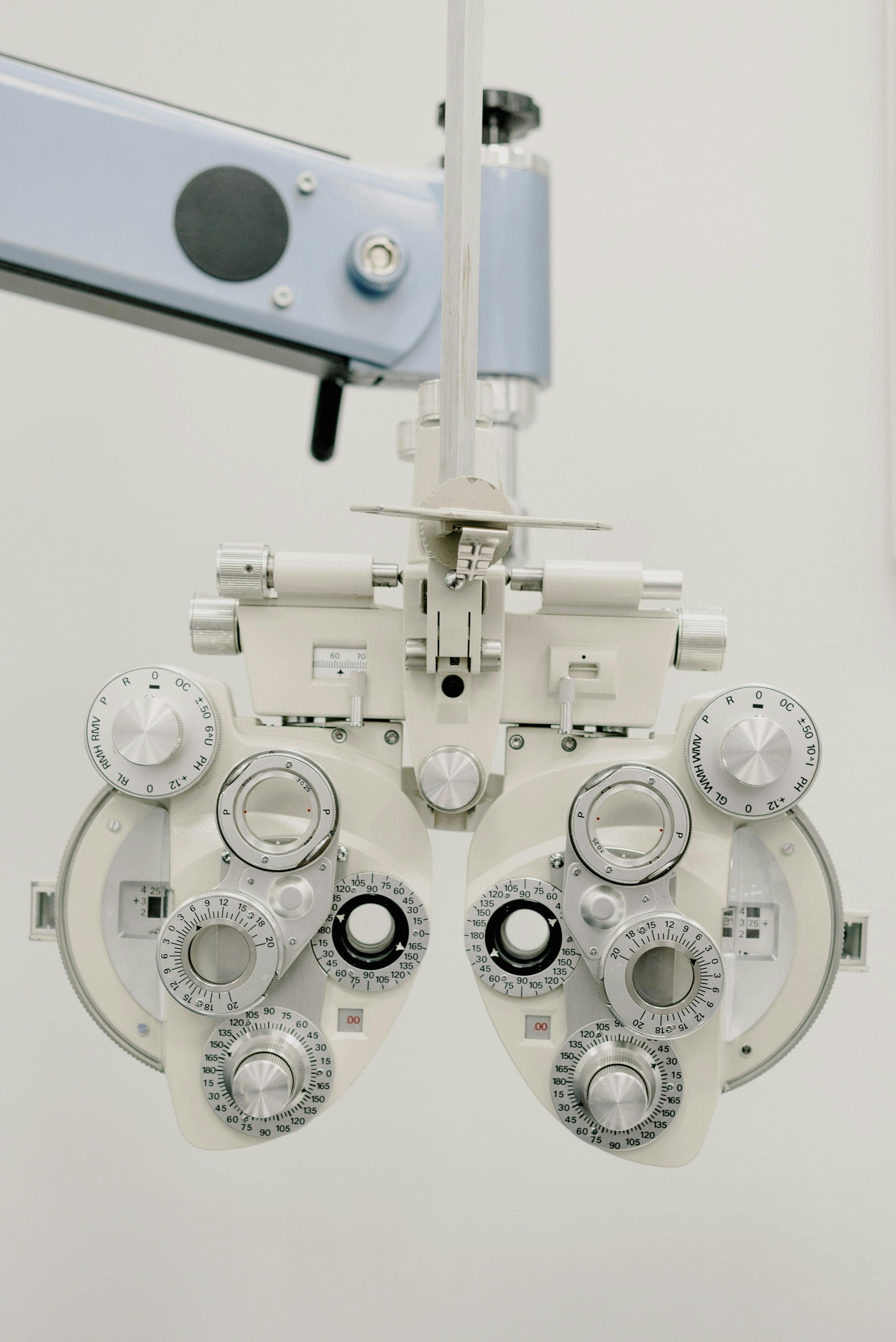
The Master of Optometry (MOptom) at the University of Hertfordshire is an integrated four-year programme designed to produce fully qualified optometrists with advanced clinical skills. This distinctive course integrates theory, research, and clinical practice from day one. Unlike a traditional BSc, the MOptom is an Integrated Master’s degree – meaning you will graduate with a higher qualification and complete the pre-registration training required for professional registration as part of the degree. In other words, by the end of this programme you won’t just have an academic degree; you’ll also be ready to register with the General Optical Council (GOC) and begin practicing as an optometrist. The curriculum covers the full spectrum of ocular health and vision science. In your first years, you will study subjects like optics, visual science, anatomy and physiology of the eye, and general human biology. As you progress, emphasis shifts to clinical skills – examining patients’ eyes, diagnosing vision problems, and learning about eye diseases and treatments. Herts provides state-of-the-art facilities for optometry students: you’ll train in modern clinics and simulation labs equipped with the latest diagnostic tools and software. For example, students practice using retinoscopes, ophthalmoscopes, optical coherence tomography (OCT) scanners, and other industry-standard ophthalmic instruments. These on-campus clinics simulate real optician practice, allowing you to hone hands-on skills like measuring visual acuity, fitting contact lenses, and detecting ocular conditions.
Course Information
About This Course
MOptom Master of Optometry University of Hertfordshire
What makes Herts Optometry unique?
The programme prides itself on innovation and real-world experience. It was one of the first optometry courses in the UK to fully incorporate the pre-registration period into the degree. This means that during the later stages of the course, you’ll undertake extended clinical placements (often with partner optometry practices or hospitals) where you test sight under supervision and complete the competencies required by the College of Optometrists. By integrating this training, Herts ensures that upon graduation you have completed the necessary clinical experience to become a registered optometrist – streamlining your path to qualification. Another highlight is the emphasis on inter-professional learning and research. You will be exposed to the latest research in vision science and even have opportunities to engage in small research projects or an extended Masters-level project in your final year. The academic staff includes experienced optometrists and vision scientists who bring a wealth of expertise.
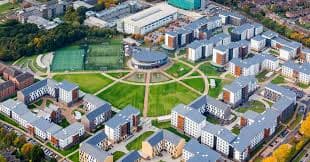
The University’s ranking and recognition in this field is strong: Herts is 1st in the East of England for Optometry, Ophthalmics & Orthoptics (Complete University Guide 2026). The programme is fully accredited by the GOC, which guarantees that the training meets national standards and that graduates can register to practice immediately. With Herts’ campus only about 25 minutes from London by train, students benefit from both a close-knit campus community and easy access to the city – useful for attending professional networking events or conferences in optometry. The programme is also known for its high graduation and progression rates — close to 100%, reflecting strong academic support and excellent student outcomes.
Career Prospects
Optometry is a rewarding healthcare career with strong demand globally, and an MOptom from Hertfordshire sets you up for success. As a qualified optometrist, you will be an eye care specialist able to diagnose vision problems, prescribe glasses or contact lenses, detect eye diseases, and provide patients with essential care for their eyesight. Many of our graduates become practicing optometrists in community optometry clinics or high-street optical practices. You might work for well-known companies (for example, Specsavers, Vision Express, or Boots in the UK) or independent optician offices. Others choose to work in hospital eye departments, often focusing on medical optometry and working alongside ophthalmologists on eye disease management. There are also opportunities in specialized clinics (like laser eye surgery centers or pediatric vision clinics). The skillset you acquire – from clinical decision-making to precision in using optical instruments – is highly valued. Herts graduates enter the workforce confident and well-prepared; indeed, 98% of Herts health and social care graduates are employed or in further study 15 months after graduation.
Typical roles for MOptom holders include: Optometrist (primary eye care practitioner testing sight and prescribing corrections), Contact Lens Specialist (focusing on fitting and managing patients with contact lenses), Optical Consultant or Clinic Manager (leading a team within a practice). Some may become an Ophthalmic Technician or Vision Science Researcher in clinical research settings. With experience, you can also diversify into areas like pediatric optometry, low-vision rehabilitation (helping patients with partial sight), or specialist medical optometry (monitoring glaucoma, cataracts, diabetic eye disease, etc.). The course also lays the groundwork for roles in academia – for instance, becoming an optometry lecturer or clinical tutor later in your career, or pursuing a PhD in vision science.
Additionally, the optical industry offers careers: you could work in product research and development for lens manufacturers or companies that design optical instruments. Herts supports your career-readiness through various enhancement opportunities. You’ll undertake “insight days” and possibly competitions or events with employers, building your network and CV. By graduation, you will have logged extensive patient-facing hours and passed the competencies required by the College of Optometrists, making you immediately employable as a registered optometrist.
The demand for optometrists is high in the UK and across East Asia. If you are from Hong Kong, China, or another East Asian country, your MOptom degree will generally be recognized or valued, though you may need to take local licensing exams depending on the country. The solid clinical training at Herts will help you meet such requirements. Many of our international graduates choose to stay in the UK for a period after graduating, taking advantage of the UK’s post-study work visa to gain experience in British optometry practices. Whether you see your future in a bustling city clinic, running your own optical business, or contributing to vision science research, the career prospects are excellent.

Entry Requirements
Entering the MOptom Master of Optometry programme requires strong academic preparation in science.
For A-level students, the typical offer is 136–144 UCAS points, which corresponds to about AAB–AAA in three A-levels. Applicants must have at least two A-levels in science subjects, with one of those being either Biology or Mathematics at grade B or above. Acceptable science subjects include Biology (or Human Biology), Chemistry, Physics, and Maths. General Studies or Extended Projects A-levels are excluded and will not count towards the offer.
For International Baccalaureate (IB), the requirement is generally a score of 34–36 points. We ask for an IB Diploma passing with 136–144 UCAS points equivalent, which means you should have two Higher Level sciences (from Biology, Chemistry, Physics, or Maths) with at least one of those at HL5 or above (if one is Biology or Maths) and the other science at a similar level.
For Interntional Qualifications:
Hong Kong: We accept the HKDSE for direct entry. You should have a good mix of relevant subjects. As a guideline, we look for results comparable to the A-level ask. That might translate to having at least Level 5 in two science-related electives (for instance, Biology and another science or Maths at Level 5), plus a strong overall profile.
China: Students from Mainland China typically need to complete an international qualification (like A-levels or IB) or an International Foundation Year, since the Gaokao alone may not be directly accepted for MOptom. If you have a year at a Chinese university or a high Gaokao score from a top tier province, please enquire – we will assess on a case-by-case basis.
Taiwan: High school students with science background and an overall percentage of 75% or above (Maths and two sciences percentage being 80% or above) might be considered on a case-by-case basis.
Japan / South Korea* – These education systems require one year of university study or a foundation programme for UK degree entry. For example, a South Korean applicant might first do a year of a relevant Bachelor’s in Korea (with strong grades, say GPA 3.0+/4.5) or attend a foundation college. We also welcome SAT/AP combinations, etc., if studying an international curriculum. The key is you must show a solid background in sciences and math.
All international applicants must demonstrate proficiency in English. The standard requirement is an IELTS score of 7.0 overall (with no less than 7.0 in any section) for non-native English speakers. Equivalent tests like TOEFL are accepted. Alternatively, if you studied in English (for example,IB / GCE / AP-SAT), that can also satisfy the requirement. The University also has pre-sessional English courses if you need to improve your language skills before starting the optometry course.
Selection Process
The selection process for MOptom Optometry at Herts evaluates both your academic ability and your commitment to the field. Initially, you will apply through UCAS (or via the international direct application portal) by the January deadline of the academic year before entry. Our admissions tutors will review your grades (achieved and predicted) and your personal statement. It’s important in your personal statement to convey why you want to study optometry. Discuss the experiences that sparked your interest in eye care – perhaps you have shadowed an optometrist, have worn glasses or contacts and thus been exposed to optometric care, or have excelled in science and wish to apply it in a clinical setting. Highlight any relevant extracurriculars: for example, involvement in science clubs, health-related volunteering, or even customer service experience (optometry is patient-focused, so communication skills matter). If your application meets our criteria, you may be invited for an interview.
Interview:
Hertfordshire’s optometry interviews are typically informal-yet-structured discussions with academic staff. In the past, candidates have been asked about their motivation for choosing optometry, understanding of the optometrist’s role, and how they have explored the field. You might be presented with a simple scenario or question to assess your problem-solving or ethics. (For example, “What would you do if a patient came in complaining of headaches – how might an optometrist be involved?” or questions about handling a challenging situation.) The interview is also an opportunity for you to demonstrate your communication skills and enthusiasm. It’s not an interrogation; the faculty wants to see if you’ll thrive in the programme and ultimately be a good eye care professional. For international students, interviews are conducted via Zoom or Teams
Work experience is not a formal requirement for optometry, but it can strengthen your application. If you have had any exposure to an optician’s clinic or done any kind of healthcare volunteering, be sure to mention what you learned from it. The admissions team will also ensure you meet subject prerequisites (e.g. having the required science background). They may give extra credit to candidates who show a good understanding of what the optometry profession entails – for instance, knowing that optometrists do more than prescribe glasses; they also detect eye diseases, provide vision therapy, etc. Doing a bit of research on the General Optical Council and the profession in the UK could be helpful.
Unlike some medical courses, no external admissions test (like UCAT) is required for optometry. After the interview stage, if you are successful, you will receive either a conditional offer (if you are still finishing school exams) or an unconditional offer if you already meet the requirements. The conditions will typically specify the A-level/IB grades needed, and perhaps an English proficiency result if applicable.
Tuition Fees and Scholarships
For international students, the tuition fee for the MOptom Master of Optometry is £17,450 per year (2026/27).
To help with financing, the University of Hertfordshire offers international scholarships. As an optometry student, you would be eligible for the Tri-annual Undergraduate Scholarships which is automatically awarded after students confirmed the offer by paying the deposit. You could receive a £1,500 off from the tuition fee every year. Herts International Regional Scholarship, which is automatically awarded based on academic merit. Depending on your grades, you could receive £1,000, £2,000, or up to £4,000 off your tuition fees. This scholarship is applied as a reduction in each year’s fee and will be confirmed in your offer letter if you qualify. For example, if you achieved top A-level results far exceeding the requirements, you might be granted the £4,000 award. If your grades are solid but more modest, perhaps £1,000 or £2,000 could be awarded. No separate application is needed – Herts will assess your transcripts and qualifications automatically. Scholarships are mutually exclusive and students will be only awarded maximum one scholarship per intake.
Living expenses in Hatfield (where the campus is) are moderate. It’s cheaper than living in central London – Starting from £134 a week ( all bills included – water, heat, power, WiFi, 24/7 security ). There are also opportunities to work part-time (perhaps in an optical shop as an assistant) during your studies, though during intensive clinical periods you’ll need to balance work and study carefully.
International students on a Student Visa can work up to 20 hours per week in term time, which can help with pocket money and experience.
Contact US
If you are from the East Asia region and interested to learn more about Hert’s Optometry Programme, please contact:
Ms Karen Wu
Regional Manager ( East Asia & South East Asia )
Email Address: k.wu@herts.ac.uk
Whatsapp: +85298130566
Wechat: karenwukalam