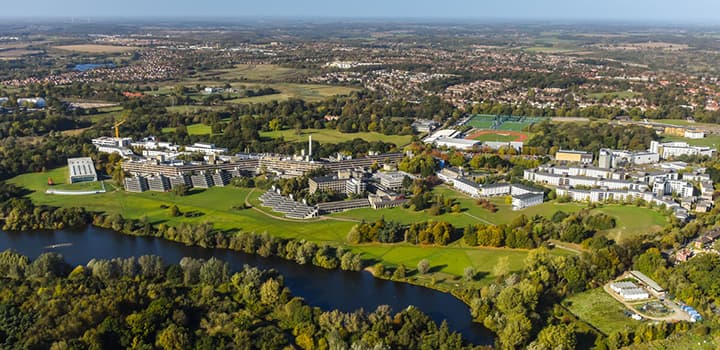

Bachelor of Occupational Therapy - UEA
Entry Requirements
BBB
Course Information
About This Course
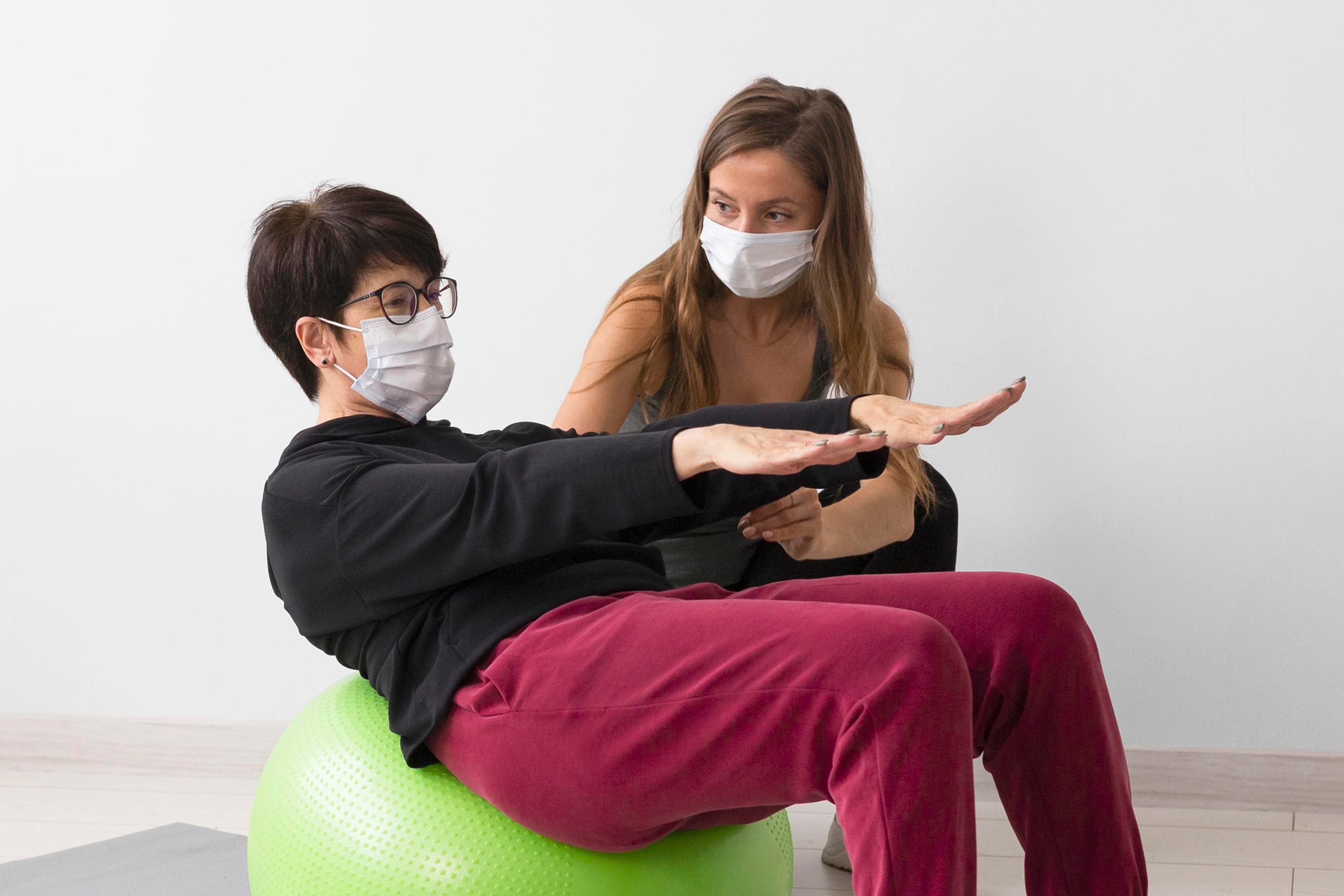
UEA Occupational Therapy Programme Overview
Embarking on the BSc Occupational Therapy at UEA means joining a #1 ranked programme in the UK for Occupational Therapy (Complete University Guide 2025). This three-year degree prepares you to make a lasting difference in people’s lives by helping them overcome challenges from illness, injury, or disability. You’ll enjoy early patient contact and hands-on learning in superb facilities – including a dedicated anatomy laboratory and a cutting-edge assistive technology suite (the “NEAT” lab) – to build practical skills essential for your future career. The curriculum balances theory, clinical practice, and inter-professional education. You will learn alongside physiotherapy and speech & language therapy students in some modules, reflecting the real-world teamwork of modern healthcare. Small class sizes and a supportive learning culture mean you’ll form close-knit bonds with peers and faculty, ensuring you develop confidence and competence in a friendly environment.
Clinical experience is woven throughout the course. Practice placements occur in every year, spanning both physical rehabilitation and mental health settings. UEA’s strong links with hospitals, community health services, and social care organizations provide you with diverse exposure – one term you might be assisting elderly patients in a rehabilitation ward, and the next working with children in a community clinic. You’ll also have opportunities for an elective placement, which you can even arrange overseas to broaden your perspective on occupational therapy in different cultures. Throughout the course, you’ll be coached to apply classroom learning to real clients, developing the clinical reasoning, communication, and compassionate approach that define great Occupational Therapists.
UEA’s programme is fully approved by the Health and Care Professions Council (HCPC) and accredited by the Royal College of Occupational Therapists (RCOT). This means the training meets rigorous professional standards – when you graduate, you’ll be eligible to register as a licensed occupational therapist in the UK (HCPC) and gain professional membership with RCOT. The degree is also recognized internationally (UEA’s OT course is approved by the World Federation of Occupational Therapists), giving you a strong credential if you seek certification back home (some countries may require a local licensing exam, but the globally reputed UEA degree will prepare you well).
UEA is also known for its vibrant campus life and student support. Norwich is a safe, welcoming city with a rich history – as an international student, you’ll quickly feel at home and benefit from a lower cost of living than bigger UK cities. Plus, UEA’s diverse student community and active student union mean you can immerse yourself in cultural events, clubs, and support networks outside the classroom, rounding out your overseas study experience. In short, the programme offers a friendly yet challenging environment to launch your journey toward becoming a qualified Occupational Therapist ready to change lives.
Career Prospects
Occupational Therapy is a high-demand healthcare career globally, and UEA graduates are exceptionally well-regarded by employers (UEA was ranked 1st for Job Prospects by StudentCrowd in 2022). Upon graduation and HCPC registration, you can pursue a wide array of roles helping people of all ages to live fuller, more independent lives. Many graduates start as Occupational Therapists in hospitals or rehabilitation centers, working in acute care teams to facilitate patients’ recovery after injuries, surgeries, or strokes. Others work in community health services, visiting clients in their homes to assess needs, recommend adaptations (like assistive equipment or home modifications), and support independent living. There is strong demand for OTs in mental health services as well, where you might help individuals develop coping strategies and life skills in clinical or community settings.
Thanks to the broad skillset you’ll acquire, you’ll also be equipped for emerging and non-traditional OT roles. For example, some OTs work in schools with children who have developmental challenges, or with elderly patients in nursing homes to improve their daily functioning. Others consult for businesses on workplace ergonomics, or serve in non-profits assisting refugees, asylum seekers, or even collaborating with police and fire services to support vulnerable populations. The interpersonal and problem-solving skills of an OT are also excellent foundations for leadership or management positions in health and social care over time. Some UEA OT graduates go into research or academia – you could become a practice educator, lecturer, or pursue a Master’s/PhD to advance the evidence base of the profession.
Typical entry-level job titles for BSc OT graduates include: Occupational Therapist (within a hospital department or community rehab team), Pediatric Occupational Therapist (specializing in children’s services), Mental Health Occupational Therapist, and Rehabilitation Consultant (working with insurance or private rehabilitation providers). With experience, you might progress to senior or specialist roles such as Neuro-rehab Specialist OT (focused on brain injury or stroke rehab), Hand Therapist (specializing in upper limb rehabilitation), or Housing/Equipment Services Manager (advising on disability accommodations). Some OTs also branch into related careers like disability consulting, health service management, or policy advising due to their holistic understanding of patient needs.
Countries across Asia and around the world are recognizing the importance of occupational therapy as populations age and the focus on mental health and community care grows. Your UEA training – with its real-world placements and professional accreditation – ensures you will enter the job market “practice-ready.”
Entry Requirements
For A-Level students, the typical entry requirement is BBB (to include subjects in health, science or social science). UEA may give a one-grade reduction (e.g. BBC) if you have an excellent Extended Project (EPQ) alongside your A-Levels.
International Baccalaureate students are usually expected to score around 31 points (with a mix of subjects that show science or psychology background).
There are many other equivalent qualifications accepted – UEA will consider BTEC diplomas (typically DDM in a relevant field) and other regional curricula on a case-by-case basis.
For students following local high school systems in East Asia:
- Hong Kong HKDSE – minimum of 4 in one elective, 4 in another compulsory or elective subject, plus 2-4 in compulsory Mathematics.
- Mainland China Gaokao – Applicants who have taken the Gaokao exam can be considered for direct entry to Bachelor Degree courses. Most students from China enter via our foundation programme (see below) or after completing one year of university study in China in a related subject with strong grades.
Taiwan / South Korea / Japan - Senior High School Graduates must progress via the UEA International Foundation Progoamme.
International Foundation Programmes – If you do not meet direct entry requirements, UEA offers an excellent International Foundation in Life Sciences, Health Sciences and Pharmacy (through the INTO UEA centre). This one-year programme covers subjects like Biology, Chemistry, and healthcare topics to prepare you for the rigors of the OT degree. Students who successfully complete the foundation with the required grades are guaranteed progression to Year 1 of BSc Occupational Therapy (no additional UCAS application needed). This pathway is popular for students from education systems that don’t align perfectly with UK A-levels. During the foundation, you’ll also get interview coaching and exposure to NHS values to strengthen your transition into the degree.
In addition to academic qualifications, English language proficiency is required. For Occupational Therapy, UEA asks for IELTS 7.0 overall with at least 6.5 in each component (reading, writing, listening, speaking). TOEFL or PTE equivalents are accepted. If you studied in English or have an international English qualification (like HKDSE English, IGCE A level, or IB English, AP..etc), that may satisfy the requirement – otherwise you’ll need to provide a test score. UEA does offer pre-sessional English courses if you need to boost your language skills before starting the degree.
Finally, all applicants should demonstrate a real passion for healthcare and helping others. The admissions team will read your personal statement carefully. They love to see when you have taken initiative to learn about Occupational Therapy – for instance, mentioning any volunteering (perhaps at hospitals, elderly homes, or community centers), job shadowing of an OT if available, or even personal experiences that inspired you to pursue this field. Highlight any science coursework or projects you’ve done that relate to human biology or psychology. It’s also good to mention teamwork or communication experiences (such as participating in clubs, sports, or group projects) since OT’s work is very collaborative. UEA does not require a specific admissions test for OT, but shortlisted candidates will be invited for an interview (online via Zoom for international students, or in-person if you’re in the UK).
Selection Process
Interview – Being invited to an interview means UEA already sees potential in your grades and personal statement. The interview is your chance to shine in person. UEA’s Occupational Therapy interviews are generally friendly and structured conversations. You might be interviewed by one or two faculty members from the School of Allied Health Professions. They will typically ask about your motivation for studying occupational therapy and your understanding of the profession. Expect questions like “Why do you want to become an Occupational Therapist?” or “What do you think an OT does on a daily basis?”. They want to see that you grasp the core idea of OT – helping people achieve their goals and independence – not just a generic desire to “work in healthcare.” It’s a great idea to mention any specific aspect of OT that intrigues you (for example, rehabilitation, mental health, or pediatric therapy) and relate it to experiences you’ve had.
Interviewers may pose some scenarios or problems to gauge your thinking. For instance, “How would you approach working with an elderly person who has lost confidence after a fall?” – there may be no single correct answer, but they are assessing your empathy, creativity, and reasoning. Don’t panic if you get a scenario; just talk through how you’d consider the person’s needs, ensure safety, encourage them gradually, perhaps involve a multidisciplinary team – basically, show a caring and thoughtful approach. You could also be asked about teamwork or communication: “Tell us about a time you worked in a team,” or how you would handle a disagreement. These questions let you demonstrate soft skills that are vital to being an OT (and a student in a collaborative cohort). Be honest and be yourself; the faculty knows you might be nervous (especially in a second language), and they will give you a chance to express yourself. International applicants can absolutely succeed in these interviews – if it’s via Zoom, make sure to test your connection and be in a quiet space.
Overall, the selection process looks at both academic and personal qualities. Strong academics (grades, relevant subjects) will get you to the interview stage. From there, your passion and understanding of OT, communication skills, and values carry a lot of weight. UEA adheres to values-based recruitment for health courses – meaning they look for candidates who show compassion, respect, integrity, and the desire to help others. Make sure these come across in your interview answers. Also, be prepared to ask them questions – maybe about placements or student support – as this shows engagement. After interviews, offers are made to the qualified candidates. If you receive a conditional offer, it will specify which grades you need to achieve (and any IELTS requirement if you haven’t met it yet). Once you accept an offer, you’ll later need to undergo an occupational health check and a police/background check (Disclosure and Barring Service) as standard procedure for all healthcare students in the UK – the university will guide you through these steps.
Living Costs
Finally, remember that living costs are another aspect: Norwich is more affordable than many UK cities – estimated living expenses are around £800-£1000 per month for a single student, covering accommodation, food, transport, etc.. While scholarships mainly target tuition, the manageable living cost in Norwich is a bonus for international students budget-wise. You are also allowed (on a student visa) to work part-time up to 20 hours a week during term. UEA’s Careers Service can help connect you to such opportunities. Just be careful to balance work and study, especially in a demanding course like Occupational Therapy.
Contact US
If you are from the East Asia region and interested to learn more about UEA's Occupational Therapy Programme, please contact:
Mr Lewis Sillett
International Officer ( East Asia )
Email Address: L.Sillett@uea.ac.uk
Whatsapp: +44 7500065760
Disclaimer: FindU is an independent social enterprise promoting UK education and equal opportunities. We have no financial affiliations, sponsorships, or commercial arrangements with any university featured. All information is for general guidance and may change without notice—please verify details directly with the universities.